
Venezuela using coronavirus as cover to crack down on dissent, report claims
A report from Human Rights Watch was featured among the site’s world news headlines.
Read MoreLive world news related to the coronavirus (COVID-19) pandemic, updated by the minute. Follow global developments, statistics, and selected cryptocurrency news.
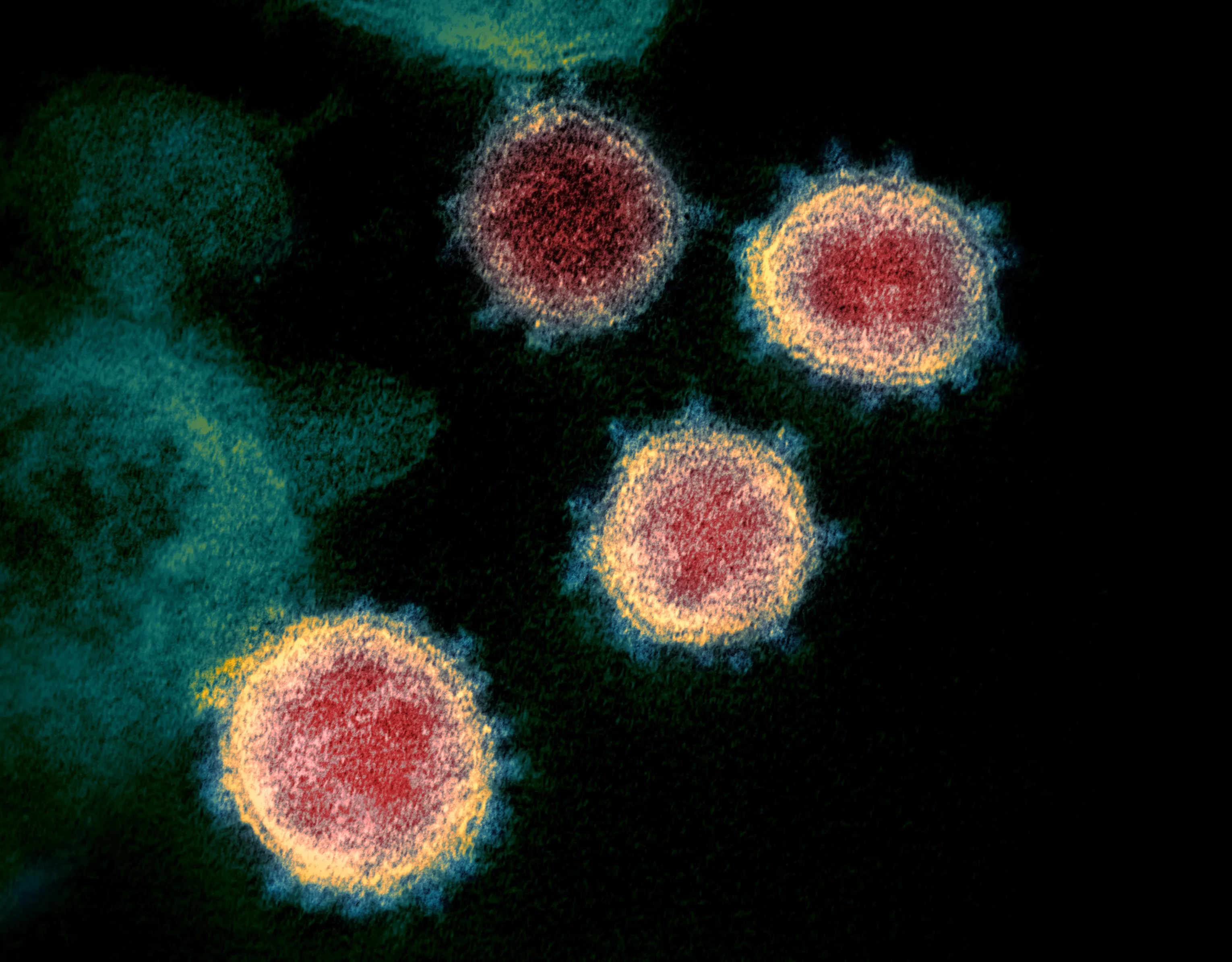

Read international coverage of the coronavirus pandemic and related global events.
Explore News
Visit the statistics section for data related to the coronavirus pandemic.
View Stats

Stay oriented with the site’s described live update format.
Read updates
A report from Human Rights Watch was featured among the site’s world news headlines.
Read More
The site featured this headline in its world news coverage.
Read More
The article covered the beginning of arguments by phone during the pandemic.
Read More
The site reported on the WHO chief’s self-quarantine after contact with a person who tested positive.
Read More
The site published an article discussing possible smartphone data sharing.
Read More
The site published an article on the initiative described in the headline.
Read More
The site discussed the subject of hoax martial law emails in a coronavirus article.
Read MoreA new study shows COVID-19 vaccination reduces risk of long COVID by half, according to the research team’s headline finding. The result adds an important layer to evidence that vaccines remain effective against severe illness and death, even as the pandemic enters a phase dominated by routine community transmission and people continue to experience symptoms long after infection.
Long COVID is generally used to describe a range of conditions lasting three months or more after an initial SARS-CoV-2 infection. Symptoms can include fatigue, breathlessness, chest pain, disrupted sleep, headaches and difficulty concentrating. The condition can develop after a mild illness, and its severity varies widely, making it difficult for researchers and patients to recognise when new or continuing symptoms are related to COVID-19.
The reported reduction is a relative risk, rather than a 50-percentage-point decrease for every person. If 10% of an unvaccinated group developed long COVID, for example, halving the relative risk would produce a rate of about 5%. That remains a meaningful difference in health outcomes, but the absolute benefit depends on the underlying risk within the population being studied.
For Australia, the finding is encouraging because long COVID can affect employment, education, household finances and social participation. It also supports the continuing value of vaccination for people at higher risk of complications, even when the immediate goal is no longer to prevent every infection. Public health decisions still need to consider waning protection, updated vaccine formulations and the needs of communities across the country.
At its core, the research compares the frequency of long COVID among vaccinated and unvaccinated groups. Its headline estimate indicates that vaccinated people had roughly half the risk of developing the condition. This finding is consistent with the broader evidence that vaccination can reduce the severity of acute COVID-19 and may also limit the lasting effects of infection.
The result does not mean a vaccinated person cannot become infected or experience long COVID. Breakthrough infections continue to occur, particularly when immunity has declined or a new variant circulates widely. The finding instead suggests that when infection does happen, vaccination is associated with a lower probability of persistent symptoms.
Researchers are cautious about applying one estimate to every age group, vaccine formulation, dose schedule and variant. Immunity differs between individuals, and factors such as prior infection, underlying illness and the timing of vaccination can influence outcomes. The study’s result is therefore most useful as evidence for an overall protective association rather than a guarantee for any one person.
Long COVID can impose costs that are not captured by hospital admission figures. A person may work reduced hours, struggle with exercise or experience cognitive difficulties long after the acute phase of infection has passed. These effects can also affect children, carers and households where several members become ill during the same period.
A lower risk is especially valuable when a population has a high underlying chance of long COVID. Vaccination cannot eliminate the condition, but preventing a share of cases can reduce pressure on general practitioners, specialists, rehabilitation services and workplace support programs. It can also preserve capacity for people recovering from other illnesses.
The finding works alongside established evidence that COVID-19 vaccination lowers the risk of hospitalisation and death, particularly during waves driven by new variants. Protection against acute severe disease is valuable in its own right, while evidence of reduced long COVID risk strengthens the public-health case for keeping recommended vaccinations up to date.
Absolute risk is essential when communicating a 50% reduction. In an illustrative comparison, if the long-COVID rate were 20% without vaccination, halving the relative risk would lower it to around 10%. If the baseline rate were only 2%, the corresponding rate would be approximately 1%. The proportional benefit may be similar, while the number of people affected is not.
Australia’s vaccination program has reached a broad section of the population through Commonwealth funding and state and territory delivery networks. General practices, community pharmacies, public clinics and Aboriginal Community Controlled Health Services have all contributed, giving residents several routes to immunisation. Access in the Australian market is shaped primarily by government-funded programs rather than the sale of COVID-19 vaccines as routine over-the-counter medicines.
The distinction also matters when comparing age groups. Older adults, people with disabilities and immunocompromised residents may face greater baseline risks, so even a moderate absolute benefit can involve many avoided cases. Younger and previously infected people may have lower baseline risk, although vaccination can still reduce the likelihood of severe illness and may lower their long-COVID risk.
| Measure | Comparison | Correct interpretation |
|---|---|---|
| Relative long-COVID risk | Vaccinated group had roughly half the risk in the study | A proportional reduction within the groups compared |
| Absolute risk | An illustrative 10% baseline would become about 5% | Five percentage points fewer, not fifty percentage points |
| Population effect | More vaccinations can mean fewer long-COVID cases | Benefits depend on coverage, infection levels and baseline risk |
| Duration | Protection changes with dose timing and circulating variants | Current immunisation status matters more than old infection alone |
Australia’s vaccine system combines national coordination with locally administered services. State health departments manage clinics and public-health communication, while private providers deliver much of the day-to-day vaccination work. Medicare provides the wider framework for medical care, and immunisation information is generally available through My Health Record and relevant state services.
Residents of Sydney, Melbourne and Brisbane can obtain vaccinations through many general practices and community pharmacies, with appointments and walk-in arrangements varying between providers. Service NSW, Service Victoria and Queensland Health offer state-specific information, while people in rural and remote areas may receive doses through mobile clinics, local councils or regional health services.
International travellers encounter a different side of Australia’s public-health system. Customs declarations, airport and seaport biosecurity requirements, and rules managed by Australian Border Force can change with global conditions. These processes remain separate from domestic vaccination access, but clear official guidance helps prevent confusion when people cross Australian borders.
People already experiencing persistent symptoms should seek clinical advice rather than relying on general information alone. A resource offering health information at FLIPERAMANERD may support early conversations with a health professional, alongside guidance from a general practitioner, specialist or allied health team. Medicare-subsidised appointments can support assessment and referral, while community health services assist people requiring culturally appropriate or multilingual care.
The virus continues to change, and new variants can alter immunity, transmission and the pattern of acute illness. They may also affect how often long COVID occurs and how well existing vaccines protect against severe outcomes. This makes ongoing surveillance important, particularly when the population’s infection levels remain high and immunity differs widely between communities.
Emergency narratives can complicate that work. Coverage of martial law email claims illustrates how alarming messages may circulate online without credible evidence. False claims about closures, medical restrictions or government action can discourage vaccination and cause people to disregard legitimate public-health advice.
Trust is strongest when authorities acknowledge uncertainty and explain why guidance changes. Australian health agencies have faced pressure to communicate new recommendations as case patterns, vaccine availability and evidence evolve. Transparent reporting, multilingual resources and consistent advice from clinicians, pharmacists and state services are essential if vaccination is to retain public support.
The continuing circulation of SARS-CoV-2 means the study should be viewed as part of a growing body of evidence rather than the final word. Coverage of the global case milestone provides context for why long-term conditions remain important even when emergency restrictions have eased. Cumulative case totals cannot show the full burden of post-infection illness.
Australian residents who are eligible can discuss current vaccination options with a general practitioner, pharmacist, Aboriginal health service or state clinic. Updated doses may be particularly relevant for older people, those with significant medical conditions and people whose last vaccination or infection occurred some time ago. Official guidance from the Australian Department of Health and the Therapeutic Goods Administration remains the appropriate reference for current eligibility and timing.
Future research needs to compare vaccine formulations, dose intervals, variants and long-COVID symptoms over longer periods. It should also clarify how protection changes after a breakthrough infection and whether vaccination lowers the severity of long COVID as well as its likelihood. The clearest current conclusion from the new study is that vaccination provides meaningful protection against persistent illness, making immunisation an important part of Australia’s broader response to COVID-19.