
Venezuela using coronavirus as cover to crack down on dissent, report claims
A report from Human Rights Watch was featured among the site’s world news headlines.
Read MoreLive world news related to the coronavirus (COVID-19) pandemic, updated by the minute. Follow global developments, statistics, and selected cryptocurrency news.
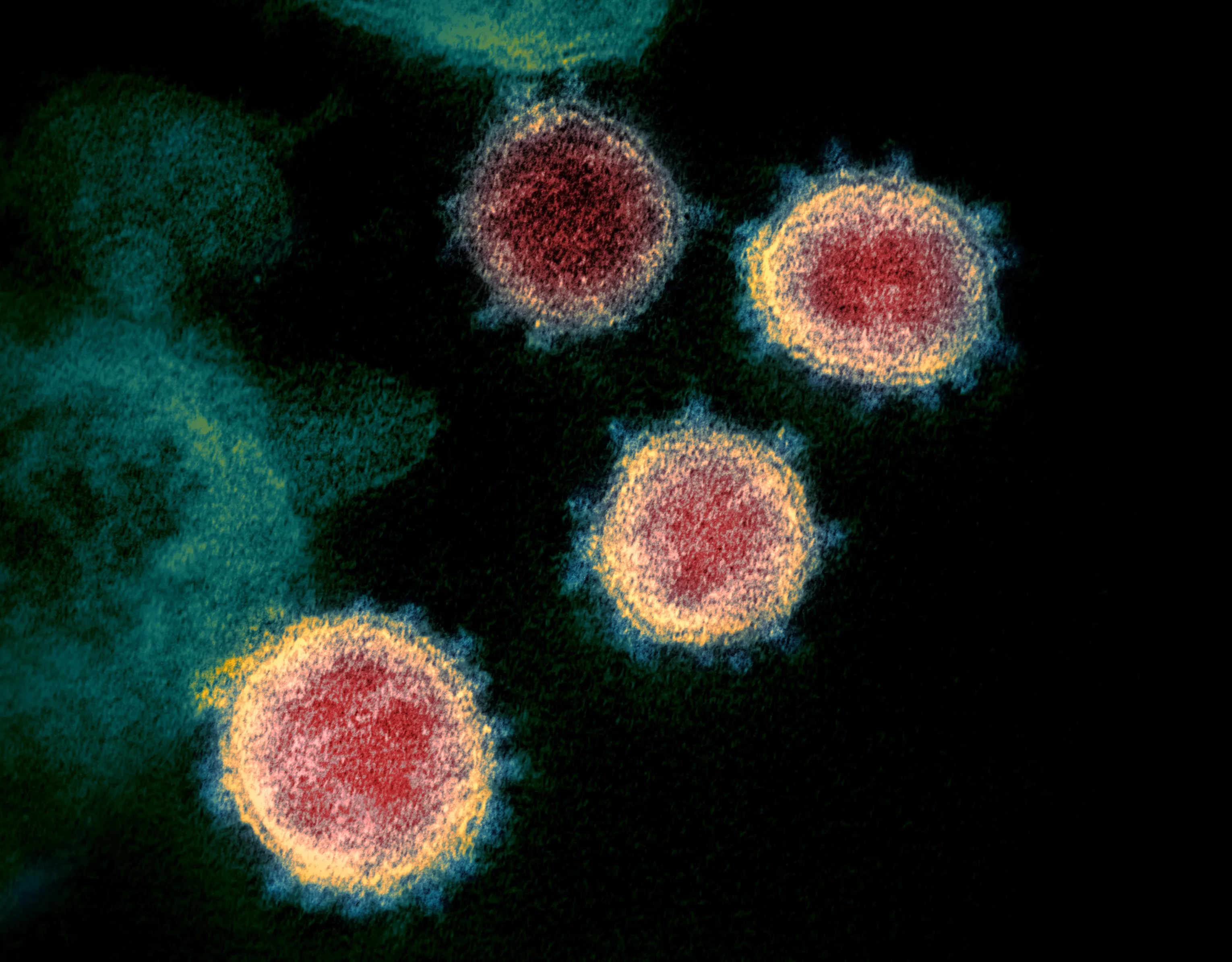

Read international coverage of the coronavirus pandemic and related global events.
Explore News
Visit the statistics section for data related to the coronavirus pandemic.
View Stats

Stay oriented with the site’s described live update format.
Read updates
A report from Human Rights Watch was featured among the site’s world news headlines.
Read More
The site featured this headline in its world news coverage.
Read More
The article covered the beginning of arguments by phone during the pandemic.
Read More
The site reported on the WHO chief’s self-quarantine after contact with a person who tested positive.
Read More
The site published an article discussing possible smartphone data sharing.
Read More
The site published an article on the initiative described in the headline.
Read More
The site discussed the subject of hoax martial law emails in a coronavirus article.
Read MoreResearchers are developing a universal coronavirus vaccine that targets multiple strains by training the immune system against conserved parts of SARS-CoV-2. Rather than matching every booster to the currently dominant variant, candidates aim to produce broader antibody and T-cell responses that remain useful as the virus continues to mutate.
The term does not mean one guaranteed dose, sterilising immunity or permanent protection from every coronavirus. It describes the intended breadth of a vaccine that might cover SARS-CoV-2 variants and, in some research programmes, related animal coronaviruses. For Australians, its value will depend on clinical evidence, regulatory approval, manufacturing capacity and a practical delivery plan.
Variant-specific vaccines can be updated by changing the genetic instructions or antigen sequence used in each dose. That speed has helped control severe disease, yet it can require repeated reformulation as new lineages gain advantage. A conserved-target vaccine would seek to reduce that cycle by retaining familiar immune targets while changing parts of the virus.
Omicron’s large family of sublineages demonstrates how quickly SARS-CoV-2 can alter antibody-binding sites. Antibodies aimed at a single variant may weaken against a descendant, while immune memory against stable regions can remain more useful. The global case milestone, with reported global cases passing 500 million as Omicron spread rapidly, shows why a strain-centred response remains vulnerable to continual change.
A universal candidate would therefore need to demonstrate activity against a diverse panel, not merely one engineered or naturally circulating isolate. Its advantage would be clearest if protection remained strong against hospitalisation and death even when protection against infection was incomplete. Reducing severe outcomes also reduces pressure on hospitals and gives countries more time to update other medical measures.
Researchers describe several ways of exposing the immune system to conserved viral features. One strategy focuses on the receptor-binding domain or other stable portions of the spike protein. Another presents a collection of variant and animal-coronavirus sequences on a single nanoparticle or viral vector, broadening the range of epitopes without relying on one strain.
Some designs use computational modelling to identify epitopes unlikely to change, then test the resulting vaccine against antibodies and T cells from people previously infected or vaccinated. Others use mosaic antigens that alternate sequence blocks from several sarbecoviruses. These multivalent displays may generate responses to several related viruses at once, although breadth does not guarantee equally strong protection against each one.
The intended benefit is better pandemic preparedness: scientists could potentially manufacture and stockpile a vaccine before a major SARS-CoV-2 variant emerges. The closest realistic milestone is likely a pan-sarbecovirus vaccine addressing SARS-CoV-2 and close relatives, with protection against a wider range of coronaviruses remaining a longer-term research goal.
A convincing research package must measure more than a dramatic antibody response in a small laboratory study. Investigators need evidence that the vaccine is safe, that immune responses are functional and that protection lasts through several relevant seasons. The strongest endpoint is reduced severe disease across multiple variants and age groups.
Early trials would normally examine dose, tolerability and immune responses before larger efficacy studies. Head-to-head testing can reveal whether a conserved vaccine performs better than an updated vaccine, while challenge studies and observational data can help explain durability. Correlates of protection remain incomplete, so an immune marker should not be presented as proof of clinical benefit.
Reporting also requires source discipline. A Russian-language online content guide has no bearing on vaccine evidence and should not be mistaken for a scientific reference; its appearance in a search result is a reminder to check the author, subject and primary citations before sharing health claims.
Several platforms could contribute, and the practical winner may combine a conserved antigen with an updated booster or mucosal delivery. Each has a different balance of immune breadth, manufacturing knowledge and regulatory complexity.
| Approach | How it works | Potential advantage | Main uncertainty |
|---|---|---|---|
| Updated strain-specific vaccine | Matches a booster to a selected or predicted variant | Rapid redesign and established production methods | Protection may narrow as the variant changes |
| Mosaic or multivalent vaccine | Displays several related sequences together | Broadens antibody and T-cell targets | More complex design and validation |
| Conserved-epitope vaccine | Targets stable regions of the spike protein | Focuses immunity on less-changing sites | Strong responses to every target are harder to achieve |
| Protein, mRNA or vector platform | Uses a selected antigen with a proven delivery method | Supports flexible and scalable manufacturing | Breadth depends on the antigen selected |
| Mucosal boosting candidate | Targets immune tissue in the nose or respiratory tract | Could reduce infection and onward transmission | Tolerability, dosing and real-world effectiveness need evidence |
No platform automatically delivers universal immunity. Mosaic designs may widen antibody recognition but could dilute responses to each individual strain. Whole-virus or vector approaches can elicit broad cellular immunity, while protein and mRNA platforms often have simpler production and established quality controls.
The best Australian-supported programme would compare candidates on neutralisation breadth, severe-disease protection, safety and scale. It should publish negative findings too, because a failed antigen can reveal which conserved regions remain vulnerable to immune escape and where the next candidate should differ.
Even an effective vaccine has limited public-health value if doses cannot be produced or supplied at the required scale. Australia has relevant expertise through CSL Seqirus and vaccine manufacturing partnerships in Melbourne, while universities and clinical networks in Sydney, Melbourne and Brisbane can contribute trial sites and population data. That does not mean any locally discussed candidate has been approved.
Local development would involve the Australian Clinical Trials Registry, ethics oversight, the Therapeutic Goods Administration and advice from bodies such as the Australian Technical Advisory Group on Immunisation. Imported clinical samples or vaccine lines must also meet Australian biosecurity and customs requirements. These checks can slow entry, but they protect the public and support defensible approval decisions.
In the Australian market, procurement could draw on existing supply contracts, pharmacy distribution and the National Immunisation Program, depending on safety and cost-effectiveness. Tropical northern Australia would require cold-chain performance in heat and humidity as well as laboratory results. Neighbouring Pacific countries also need affordable access, technology transfer and dependable supply rather than a vaccine reserved for wealthy markets.
A broader vaccine strategy must be accompanied by clear rules for records, consent and adverse-event reporting. Australia already links vaccination information with safety surveillance, but any expanded programme should explain how personal data are protected and retained. Public agencies also need consistent correction of misleading claims without allowing bad information to gain repeated attention.
An Israeli coronavirus outbreak that gave rise to a cellphone tracking initiative illustrates how emergency technologies can outpace public trust. The same design principle applies to digital health passes and location records: transparency, limited retention and independent oversight are essential when people are asked to share sensitive information.
Researchers should communicate three points separately: whether a candidate exists, whether it has produced clinical benefit, and whether regulators have approved it. A laboratory announcement is not a rollout, an authorisation is not a guarantee of protection for every person, and approved products still require active safety monitoring.
Until late-stage efficacy evidence and regulatory review are complete, the universal vaccine remains a research objective rather than an Australian treatment option. People eligible under current local guidance should continue following official advice and should not delay a recommended dose while waiting for a next-generation candidate.
Progress should be judged by the quality and independence of evidence, not by how often a laboratory or politician uses the word universal. Australian readers can watch for the following scientific and practical signals.
Scientific signals
Australian readiness checks
The likely first success would be a vaccine that reliably reduces severe disease across a wider set of variants, even if it does not prevent every infection. That outcome would still represent a meaningful advance for Australia, particularly if production can be maintained and supply remains available across the country and the wider Pacific region.