
Venezuela using coronavirus as cover to crack down on dissent, report claims
A report from Human Rights Watch was featured among the site’s world news headlines.
Read MoreLive world news related to the coronavirus (COVID-19) pandemic, updated by the minute. Follow global developments, statistics, and selected cryptocurrency news.
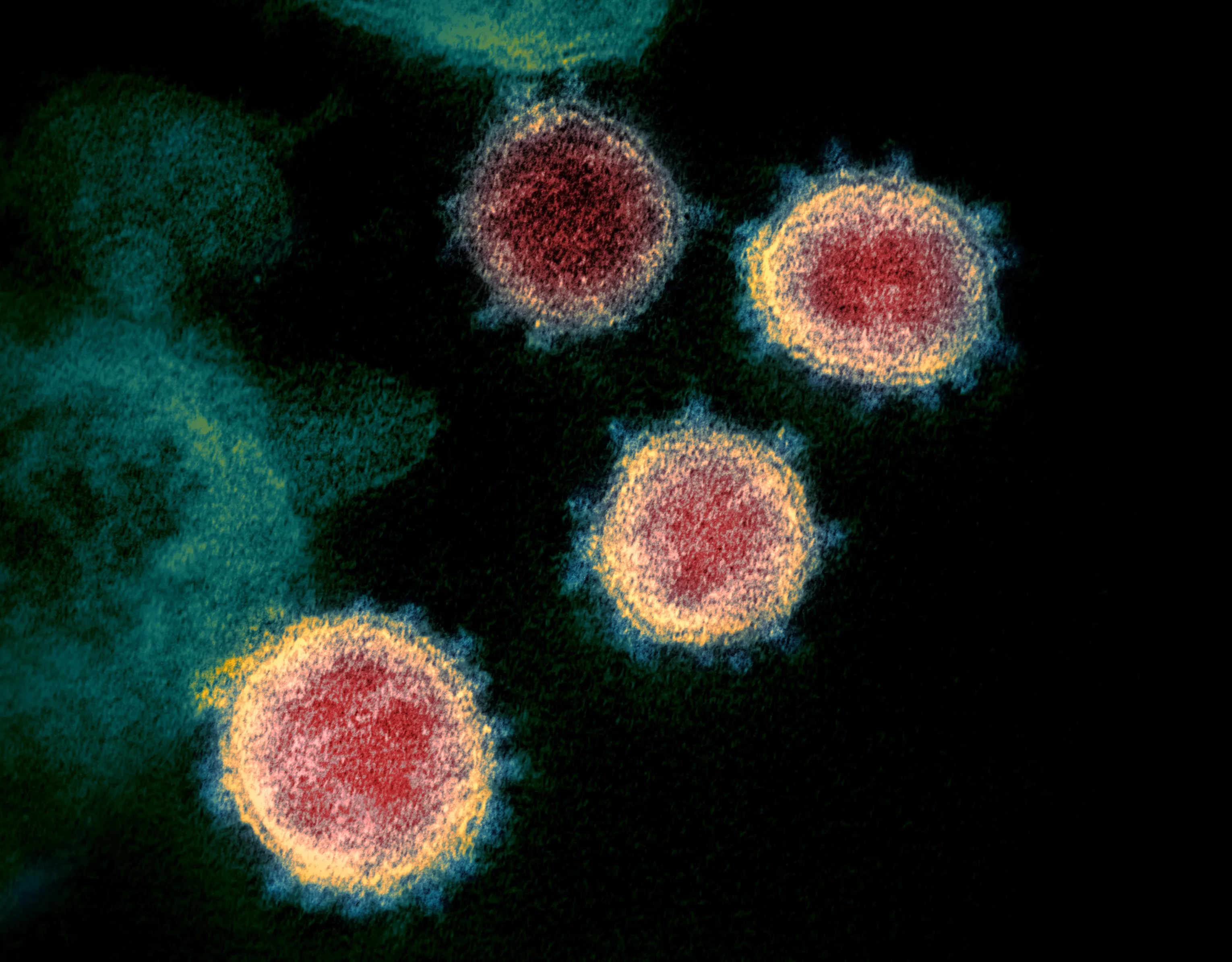

Read international coverage of the coronavirus pandemic and related global events.
Explore News
Visit the statistics section for data related to the coronavirus pandemic.
View Stats

Stay oriented with the site’s described live update format.
Read updates
A report from Human Rights Watch was featured among the site’s world news headlines.
Read More
The site featured this headline in its world news coverage.
Read More
The article covered the beginning of arguments by phone during the pandemic.
Read More
The site reported on the WHO chief’s self-quarantine after contact with a person who tested positive.
Read More
The site published an article discussing possible smartphone data sharing.
Read More
The site published an article on the initiative described in the headline.
Read More
The site discussed the subject of hoax martial law emails in a coronavirus article.
Read MoreResearchers are reporting encouraging results from a new antibody-based treatment designed to neutralise a broad range of SARS-CoV-2 variants. Early laboratory findings suggest that the therapy may remain active against strains that have weakened the effect of some earlier monoclonal antibodies, including Omicron subvariants.
The development is significant because COVID-19 continues to evolve. Variants can alter the shape of the spike protein used to enter human cells, allowing them to escape antibodies produced by vaccination, previous infection or an earlier medicine. A treatment that recognises several stable parts of the virus could offer wider protection as new lineages emerge.
The evidence is still developing. Results from laboratory experiments and animal models do not guarantee that a therapy will prevent severe disease in people. Clinical trials must establish the correct dose, safety profile, durability and effectiveness among older adults, immunocompromised patients and people with other medical conditions.
For Australian readers, the news arrives as hospitals and public health agencies continue to monitor respiratory illness through the year. People in Sydney, Melbourne, Brisbane, Perth and regional communities may experience different waves of COVID-19, influenza and other viruses, making flexible prevention and treatment options valuable.
| Treatment approach | Main strength | Key limitation | Likely role |
|---|---|---|---|
| Broad-spectrum antibody | May recognise several variants and reduce viral replication | Requires clinical validation and usually an infusion or injection | Early treatment or prevention for high-risk groups |
| Variant-specific antibody | Can be highly effective against a targeted strain | May lose activity when the virus mutates | Use during a defined variant wave |
| Antiviral tablet | Can be taken at home by eligible patients | Drug interactions and timing requirements can limit use | Early treatment after diagnosis |
| Updated vaccine | Builds broader immune memory before infection | Protection against infection can decline over time | Prevention of severe illness and hospitalisation |
Antibodies work by attaching to a virus and blocking its ability to infect cells. Many first-generation COVID-19 antibody therapies focused on a specific area of the spike protein, especially the receptor-binding domain. That approach could produce strong protection against the strain used in testing, but a few mutations sometimes reduced the antibody’s ability to bind.
A broad-spectrum antibody takes a different approach. It may attach to a conserved region of the virus, meaning a part that cannot change easily without harming the virus’s ability to spread. Some experimental treatments also combine two or more antibodies, creating a wider shield against immune escape.
The phrase “all known variants” should be interpreted carefully. It generally refers to the variants tested by researchers at a particular time, rather than every possible future mutation. SARS-CoV-2 surveillance changes quickly, and a new lineage could still develop a mutation that reduces treatment activity.
This distinction matters for public communication. A promising pan-variant antibody is not a guarantee that recipients cannot become infected. Its potential value may instead lie in reducing viral load, shortening illness or preventing progression to hospital care.
Laboratory tests usually expose live virus or a virus-like particle to different concentrations of an antibody. Researchers then measure whether the treatment prevents infection of susceptible cells. A broad response across several Omicron descendants and other recognised lineages would support the claim that the medicine has wide neutralising activity.
Animal studies add another layer of information. If treated animals show less virus in the lungs, reduced inflammation or improved survival, researchers gain evidence that the antibody may do more than bind to the virus in a test tube. These results still cannot reproduce the full complexity of human immunity, however.
Clinical trial evidence will be the decisive test. Investigators need to compare the antibody with a placebo or standard treatment across large and diverse groups. They will examine hospitalisation, oxygen requirements, death, symptom duration, viral clearance and the frequency of rebound infection.
The research also needs to account for timing. Antibody treatment may work best soon after symptoms begin or after a high-risk exposure. A medicine given late in the disease process may have less influence once inflammation, rather than uncontrolled viral replication, becomes the primary cause of serious illness.
A successful broad antibody could have two main applications: treatment after infection and prevention before or soon after exposure. Preventive use could be particularly relevant for people whose immune systems respond weakly to vaccination, such as some transplant recipients or patients receiving intensive cancer therapy.
The practical delivery method will shape its usefulness. An intravenous infusion may provide reliable dosing but requires trained staff, a suitable clinic and observation time. An injection could be easier to distribute through hospitals, general practices or specialised treatment centres, although the dose and storage requirements would still need careful planning.
Antibody therapy would sit alongside vaccines and antiviral medicines rather than replace them. Vaccination remains important because it trains the immune system in advance and can provide protection that lasts beyond the immediate treatment window. Antivirals may be more convenient for eligible patients who can begin them promptly at home.
Doctors would also need to consider interactions with existing therapies, kidney or liver function, previous allergic reactions and the patient’s stage of illness. A treatment algorithm might prioritise patients most likely to benefit, particularly during periods when hospitals are under pressure from COVID-19, influenza and respiratory syncytial virus.
Information about supplements and immune health also circulates widely online. General sources such as curcumin health information should not be treated as substitutes for evidence about a prescription antibody, vaccination or antiviral medicine. Patients should discuss any supplement with a clinician, especially when taking medicines that affect blood clotting or immune function.
Australia has strong experience with immunisation programmes, infectious disease surveillance and biologic medicine manufacturing. A broad antibody could be assessed through the Therapeutic Goods Administration, with clinical guidance shaped by the Australian Technical Advisory Group on Immunisation and state and territory health departments.
Access would probably begin with people at greatest risk of severe disease. This could include older Australians, residents of aged-care facilities, people with significant immune suppression and patients with serious chronic conditions. Distribution would need to reach both metropolitan hospitals and rural or remote communities, where travel to an infusion centre can be difficult.
Local conditions could affect demand. Winter respiratory illness puts additional pressure on emergency departments in Melbourne and Hobart, while long travel distances in Western Australia, the Northern Territory and regional Queensland can delay treatment. Public health teams may also need culturally appropriate communication for Aboriginal and Torres Strait Islander communities.
The Australian market already relies on a mixture of public hospital services, private clinics, community pharmacies and Medicare-supported general practice. Cost, reimbursement and cold-chain requirements would influence whether the antibody becomes a widely available treatment or remains limited to specialist centres.
A new therapy could also affect workplaces and care arrangements. The shift towards hybrid employment has changed how Australians manage exposure and illness, as discussed in this report on remote work adoption. Even with better treatment, staying home while infectious remains important in offices, schools, hospitals and retail settings.
Monoclonal antibodies can cause side effects ranging from mild injection-site reactions to rare allergic responses. Infusion-related symptoms may include fever, chills, nausea, headache or changes in blood pressure. Trials must identify how often these events occur and whether the treatment is safe for people with complex medical histories.
A broad antibody can also exert evolutionary pressure on the virus. If treatment reduces most viral particles but allows a resistant minority to survive, those particles could become more common. Researchers may therefore study combination antibodies or pair the treatment with an antiviral to reduce the chance of resistance.
Manufacturing capacity is another consideration. Antibodies are complex biologic medicines, and production can take time. A therapy that works in a trial may still face shortages if demand rises quickly during a major wave. Australian regulators and suppliers would need reliable forecasts, storage systems and transparent eligibility rules.
Patients should also be wary of exaggerated online claims. The term “variant-proof” can suggest permanent protection, but no medical product can guarantee that future viral evolution will have no effect. Clear labelling should explain which strains were tested, how long protection lasted and whether the medicine prevents infection or mainly reduces severe outcomes.
The most important updates will come from peer-reviewed clinical data rather than preliminary announcements. Researchers will need to show that the antibody performs consistently in real patients, including vaccinated people and those with prior infections.
Surveillance will remain essential because a therapy’s performance can change as new lineages appear. Australia’s genomic monitoring, hospital admissions and wastewater testing can help identify whether a treatment is retaining activity across states and territories. Readers seeking ongoing updates can follow live coronavirus coverage alongside advice from Australian health authorities.
Evidence that would strengthen confidence
Issues that may limit adoption
A positive trial would mark an important advance in COVID-19 care, especially for people who remain vulnerable despite vaccination. It would not end the need for updated vaccines, testing, ventilation or sensible precautions during outbreaks. Instead, a durable antibody could become another layer in Australia’s response, helping clinicians manage a virus that continues to change.