
Venezuela using coronavirus as cover to crack down on dissent, report claims
A report from Human Rights Watch was featured among the site’s world news headlines.
Read MoreLive world news related to the coronavirus (COVID-19) pandemic, updated by the minute. Follow global developments, statistics, and selected cryptocurrency news.
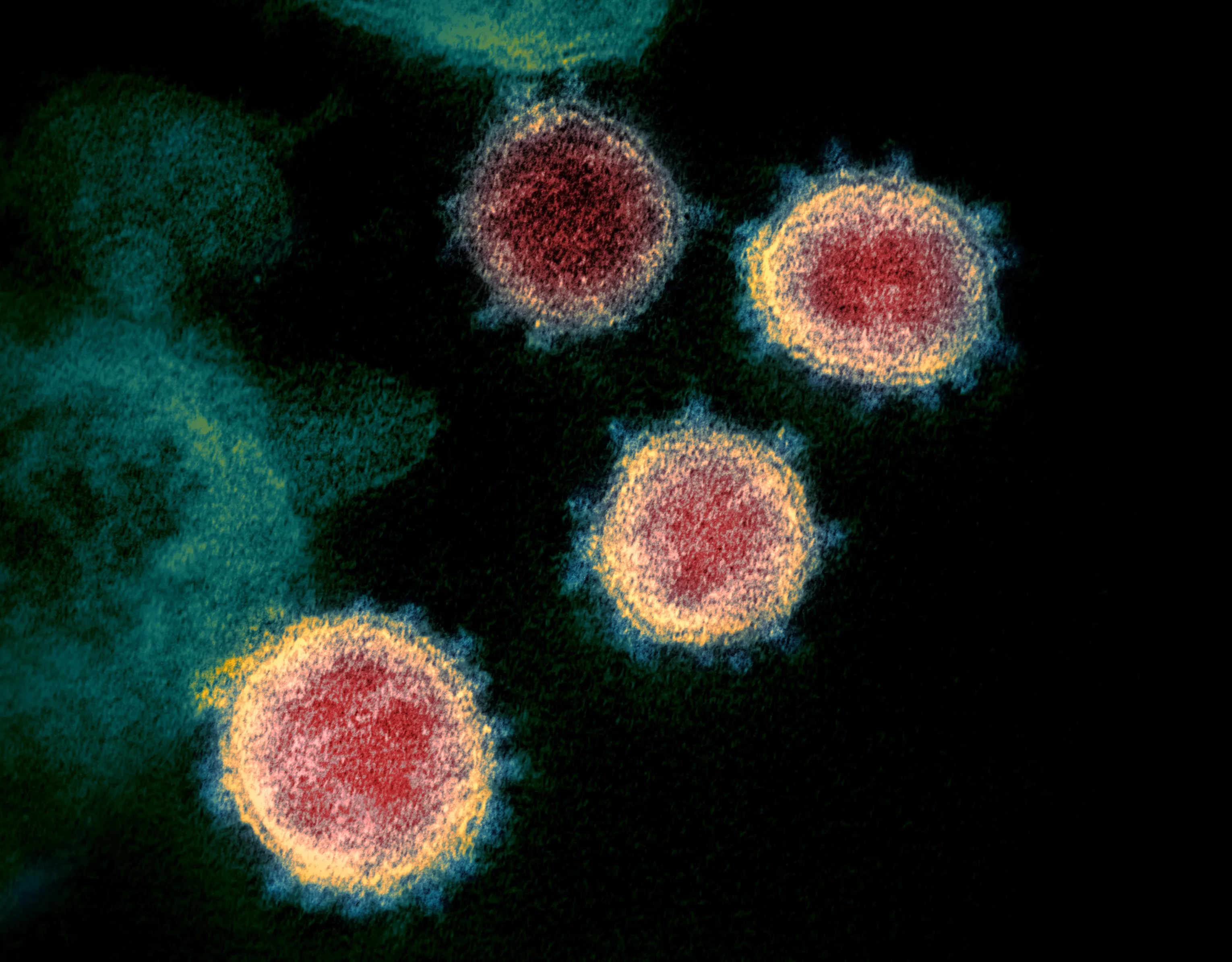

Read international coverage of the coronavirus pandemic and related global events.
Explore News
Visit the statistics section for data related to the coronavirus pandemic.
View Stats

Stay oriented with the site’s described live update format.
Read updates
A report from Human Rights Watch was featured among the site’s world news headlines.
Read More
The site featured this headline in its world news coverage.
Read More
The article covered the beginning of arguments by phone during the pandemic.
Read More
The site reported on the WHO chief’s self-quarantine after contact with a person who tested positive.
Read More
The site published an article discussing possible smartphone data sharing.
Read More
The site published an article on the initiative described in the headline.
Read More
The site discussed the subject of hoax martial law emails in a coronavirus article.
Read MoreThe COVID-19 pandemic caused a surge in mental health emergency visits among teens in Australia, with hospitals recording more adolescents presenting with self-harm, suicidal distress, panic and severe behavioural problems. The rise followed successive lockdowns, school closures and interruptions to routine care. It was simply an increase in coronavirus illness: the pandemic’s social and health effects created pressure on young people whose distress was already difficult to reach.
Emergency departments became a crucial safety net when services closed or moved online. A teenager in crisis may reach hospital after outpatient support is unavailable, school counselling is missed or parents cannot arrange a prompt private appointment. Triage staff then manage demand that is urgent, costly and often connected to wider family or social problems.
Australian figures varied by state, age group and period, and emergency data can undercount community distress that never became an admission. Still, the pattern is consistent across research: sharp increases appeared in some adolescent cohorts during the most disruptive restrictions, while high-risk groups continued to need care afterwards. Emergency presentations are one measure of a wider crisis.
Australian teenagers live through the same pressures seen elsewhere, but the local response has distinct features. Melbourne’s extended remote-learning periods, Sydney’s repeated stay-at-home orders, fragmented state health laws and a mixed system of public hospitals, general practice and youth services all shaped the journey from distress to treatment.
A widely cited analysis of United States emergency data found a 62% rise in mental-health visits among 12- to 17-year-olds in 2020 compared with 2019, with the largest increases among girls. Australian figures use different systems and definitions, but local surveillance has also identified sharp increases in adolescent distress and self-harm-related care.
| Period | Common adolescent pattern | Pressure on services |
|---|---|---|
| Before 2020 | Baseline levels of crisis presentations, with continuing levels of underlying distress | Most crises were managed through primary, school and community care |
| 2020–21 restrictions | More self-harm, suicidal distress, panic and family-conflict presentations | Isolation, infection controls and workforce pressure narrowed available options |
| Recovery period | Persistent high need, recurrent attendance and more complex presentations | Demand outpaced some follow-up services, beds and specialist capacity |
The pandemic also altered what happened after arrival. Infection-control rules could separate young people with psychiatric symptoms from other patients, reduce available beds in some hospitals and discourage walk-in families. Staff shortages, burnout and the need to treat infectious patients made calm, specialist adolescent care harder to provide.
Repeated attendance is especially concerning because it can signal unresolved treatment needs rather than repeated failure by a young person. A visit may provide brief safety, yet without follow-up the same risks can return. Clear discharge plans and rapid access to community care therefore matter as much as the emergency response.
Adolescents are especially vulnerable to collective disruption because identity, confidence and belonging are still developing. Peer relationships can provide protection, yet isolation, cancelled milestones and constant uncertainty can magnify stress. The move away from familiar routines may also delay recognition of warning signs by families, teachers and young people themselves.
Screen-heavy days, disrupted sleep and reduced physical activity affected mood and attention. Many teenagers normally regulate stress through school, sport, work and informal gatherings; replacing these with long hours online can provide comfort while increasing comparison, conflict and disordered eating. For some, the pandemic converted ordinary sadness into persistent anxiety or despair.
Historic reporting in the site’s pandemic case updates shows how quickly infection counts, restrictions and public fear could change a young person’s sense of safety. Crisis-control messages may be necessary, but unclear or shifting rules also make it harder to plan school, work and social life. LGBTQ+ young people, those with chronic illness or disability, and adolescents exposed to violence or financial instability faced additional barriers.
Melbourne’s prolonged periods of remote learning removed classroom contact just as social pressure peaked. Sydney’s recurring stay-at-home orders changed familiar routines around trains, shopping and sport. These were significant changes: for teenagers, they altered where safety was found, how identities were expressed and when help could be sought.
Exposure was uneven. Brisbane generally experienced less severe movement restrictions than Melbourne, yet schools, exams and organised sport still changed. Regional and remote students faced different barriers because local clinicians were scarce and travel for specialist care could take hours. Flexible attendance, online classes and community health workers became important bridges.
Telepsychiatry and video counselling expanded access, but quality depended on privacy, device access and broadband. A teenager sharing a crowded home may not feel safe discussing abuse or self-harm on a call. In-person school wellbeing staff, community nurses and trusted general practitioners remained essential for people unable to use digital care consistently.
Family finances often tightened during lockdowns. Job insecurity, reduced hours, high rents and interrupted education placed pressure on parents and teenagers at once, making private mental-health appointments difficult to afford. Financial volatility added another layer of anxiety in some households. The site’s buy crypto section follows one volatile part of the economy, but speculative activity cannot solve debt or housing insecurity.
Australian families navigate a mixed care market. Headspace centres and community services offer low-barrier support, while general practitioners can provide Medicare-funded care and refer to psychologists, psychiatrists or social workers. Private providers expand choice but are unevenly affordable, and families in outer suburbs or regional areas may wait longer for an adolescent specialist.
Waiting is not neutral for a young person in escalating distress. Parents may turn to a hospital emergency department because it is nearby, open around the clock and does not require a referral. That choice reflects gaps in earlier care as much as the severity of the episode, leaving hospital staff to manage problems that could have been treated in the community.
Responsibility for mental-health law is split across governments, which matters when a teenager crosses a state border or receives care through different services. The Commonwealth Mental Health Act 2012 and state and territory legislation set rules for assessment, treatment and compulsory care in different settings. NSW, Victoria and other jurisdictions apply their own thresholds and protections.
Pandemic-era legislation and public-health directions temporarily changed service delivery and some emergency provisions. These changes raised legitimate questions about liberty, consent and the use of seclusion. Families should be told why an assessment is happening, who has authorised it, how long it can last and how to request review under the law applying in that state.
Legislation cannot create beds, trained staff or timely follow-up. Medicare-funded telehealth helped maintain treatment, but rebates do not automatically solve workforce shortages. Better coordination between emergency departments, crisis teams, GPs, schools and youth services is needed so compulsory or emergency care is not the only available option.
A safe discharge is only the beginning of recovery. Within days, the young person should have a named clinician or navigator, a review of medication and safety, and a plan for school return and ordinary activities. Families need practical help with referrals, transport and costs. Without that bridge, an emergency visit may simply postpone the next crisis.
Peer and family support can reduce isolation, but it must complement professional care rather than replace it. Youth-led groups, culturally safe services and supports for Aboriginal and Torres Strait Islander young people improve trust and engagement. Schools can also rebuild belonging by restoring predictable routines, supervised spaces and access to trusted adults.
Urgent help remains essential. In Australia, call 000 if there is immediate danger or a life-threatening self-harm attempt; Healthdirect on 1800 022 022 can direct families to local care, and Lifeline on 13 11 14 offers 24-hour support. For Aboriginal and Torres Strait Islander young people, 13YARN on 13 92 76 provides culturally safe support.
Families and schools can reduce risk by treating emotional change as a health concern, not a phase to be dismissed. A calm conversation, a check-in plan and rapid access to a familiar service are usually more useful than waiting for a crisis. Local pathways vary, so a general practitioner, school wellbeing coordinator, headspace centre or healthdirect can help identify the nearest appropriate option.
Responses work best when they are coordinated rather than fragmented. A teenager who leaves hospital should not have to restart the story at every appointment, and a family should know whom to call during school hours, after hours and on weekends. Written plans should be simple enough to use during a period of high stress.