
Venezuela using coronavirus as cover to crack down on dissent, report claims
A report from Human Rights Watch was featured among the site’s world news headlines.
Read MoreLive world news related to the coronavirus (COVID-19) pandemic, updated by the minute. Follow global developments, statistics, and selected cryptocurrency news.
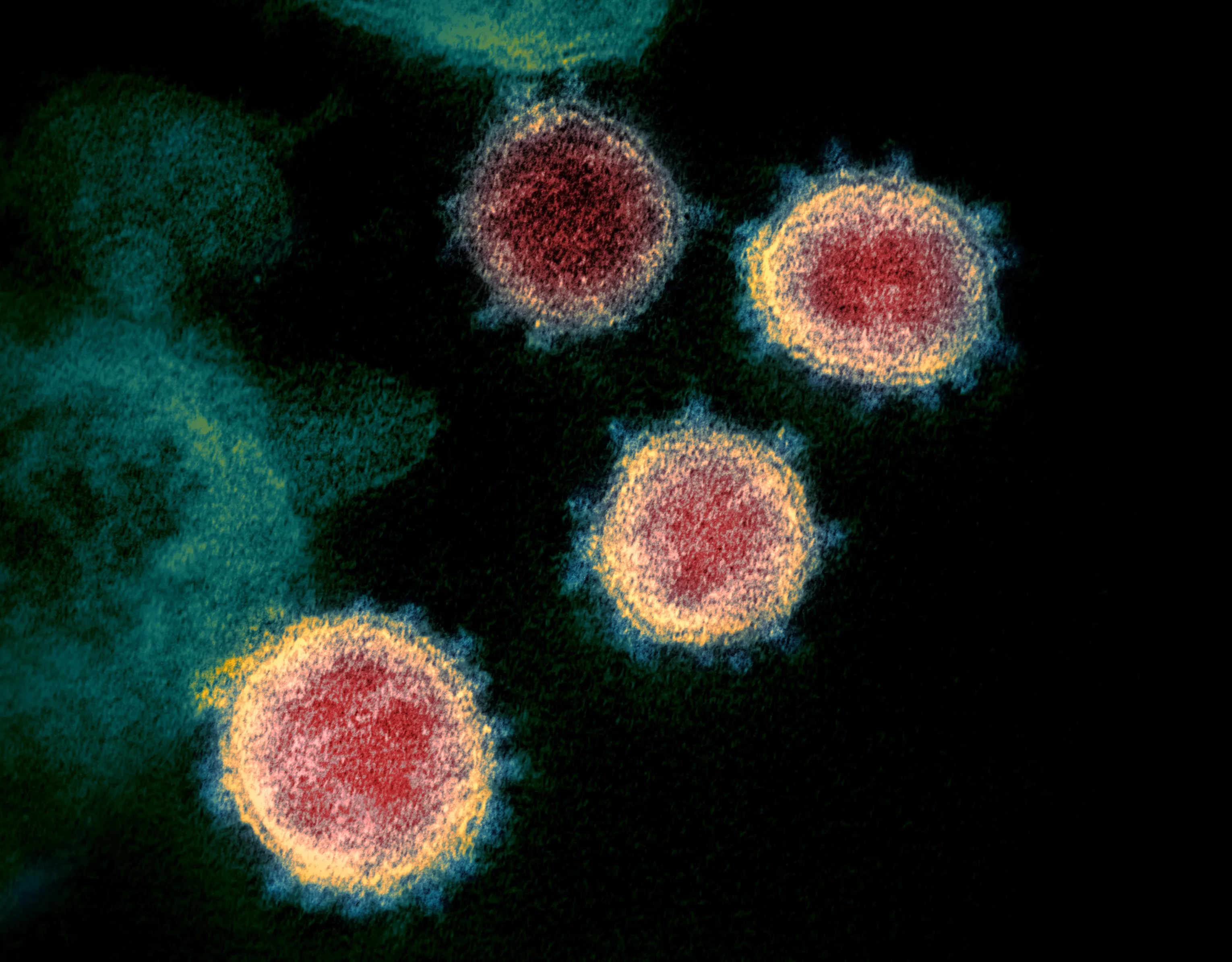

Read international coverage of the coronavirus pandemic and related global events.
Explore News
Visit the statistics section for data related to the coronavirus pandemic.
View Stats

Stay oriented with the site’s described live update format.
Read updates
A report from Human Rights Watch was featured among the site’s world news headlines.
Read More
The site featured this headline in its world news coverage.
Read More
The article covered the beginning of arguments by phone during the pandemic.
Read More
The site reported on the WHO chief’s self-quarantine after contact with a person who tested positive.
Read More
The site published an article discussing possible smartphone data sharing.
Read More
The site published an article on the initiative described in the headline.
Read More
The site discussed the subject of hoax martial law emails in a coronavirus article.
Read MoreIndia has reported the first official genome-sequence detections of XFG, an emerging recombinant SARS-CoV-2 lineage often described as a hybrid COVID-19 variant. The results came through routine surveillance, and “first” refers to India rather than the world, since XFG had already been identified in other countries.
Calling XFG a hybrid can mislead. It is not a laboratory-made virus and it does not combine two complete viruses into one. Its name reflects genetic ancestry: parts of its genome came from two widely circulating Omicron descendants. What matters for public health is whether the recombinant lineage gains a sustained advantage in transmission, evades immunity or changes the pattern of illness.
For Australians, the finding is a reason to watch imported introductions and local sequencing data, not to expect an immediate nationwide wave. Australia now manages COVID-19 through routine clinical care, targeted surveillance, vaccination and antiviral access, while travellers can enter without the broad screening and quarantine regimes used in earlier pandemic years.
Indian public-health laboratory networks found XFG sequences in samples collected under SARS-CoV-2 genomic surveillance. A sequence-based detection can represent a confirmed infection, but it does not reveal when or where that person caught the virus. Undetected spread may have occurred earlier, especially in a country of India’s scale and with uneven testing access.
The early Indian reports did not indicate that XFG produces a distinct illness. They mainly added a lineage to existing pandemic tracking. Researchers watch its share of sequenced samples, geographic spread, growth relative to other lineages and any change in hospital admissions or deaths.
Recombination is an ordinary feature of SARS-CoV-2 evolution. When two variants infect the same cell, their genetic material can be copied into new combinations. The resulting lineage may behave differently from either parent, though it may also lose advantages if the combination is poorly suited to human cells.
XFG is descended from BA.2.3.3 and XBB.1.5, both Omicron-era lineages. Genetic sequencing indicates that much of its spike protein comes from BA.2.3.3, while the remainder of the genome carries XBB.1.5 ancestry. This mosaic structure is why some reports use the word “hybrid”.
The recombination was not an engineered event. BA.2.3.3 and XBB.1.5 circulated widely enough to infect some of the same people. SARS-CoV-2 can exchange segments while replicating inside those co-infected cells, creating offspring with a new combination of traits.
International agencies have tracked XFG for additional monitoring, but the label does not automatically mean it causes more severe disease or poses a greater threat than every other circulating lineage. Classification can change as epidemiological, laboratory and clinical evidence develops. Australia’s assessment therefore depends on local and international surveillance rather than the headline attached to the variant.
The symptoms associated with XFG remain familiar: fever, cough, sore throat, fatigue, headache and sometimes gastrointestinal illness. Loss of smell or taste can still occur, although it has become less prominent in many recent infections. Australian health services have not identified a distinctive XFG symptom that would separate it from other COVID-19 cases.
Severity depends more heavily on age, prior immunity, underlying illness and access to early treatment than on the lineage’s name. Older people, immunocompromised patients and people with significant chronic conditions remain more likely to be hospitalised. Evidence is still developing, and early comparisons can be distorted by differences in vaccination, previous infection and which patients were tested.
Rapid antigen tests detect viral proteins but cannot identify XFG. A positive RAT should therefore be treated as COVID-19 without waiting to learn which lineage caused it. PCR testing can confirm infection, while genome sequencing is needed to identify the variant. People with concerning symptoms should seek medical advice, and eligible higher-risk patients should discuss antiviral treatment promptly.
A side-by-side comparison shows why a new lineage label should not be confused with a new clinical rule.
| Feature | XFG | Earlier Omicron descendants | Australian relevance |
|---|---|---|---|
| Genetic pattern | Recombinant of BA.2.3.3 and XBB.1.5 | Usually defined by accumulated mutations within an established lineage | Sequencing identifies the lineage, while most clinical care remains the same |
| Evidence base | Emerging, with fewer clinical observations | Larger body of data on transmission, immunity and severity | Decisions should follow observed outcomes rather than the label |
| Severity | No established evidence of greater severity | Severity varies with age, immunity and treatment | Vulnerable Australians still need prompt medical advice |
| Home testing | A RAT cannot identify XFG | A RAT also cannot distinguish other variants | No special rapid-test procedure is required |
| Surveillance status | Tracked internationally as an emerging recombinant lineage | Some descendants have been retired from enhanced monitoring | Current advice should come from Australian health authorities |
The key distinction is between detection and impact. Finding a recombinant lineage in a sample confirms its presence, but it does not establish that the lineage will dominate, cause more hospital admissions or evade existing immunity. Australia can monitor those questions through existing laboratory and public-health systems.
Australia’s genomic surveillance involves public-health laboratories, infectious-disease specialists and the Australian Government’s health agencies. State and territory health units collect notifications, selected positive samples are sequenced and the results contribute to national monitoring. Wastewater testing at selected sites can also provide an early signal when clinical testing is limited.
The Therapeutic Goods Administration assesses vaccines and medicines for use in Australia. The Australian Technical Advisory Group on Immunisation advises on vaccination programs, while the Pharmaceutical Benefits Scheme subsidises many medicines for eligible patients. COVID-19 vaccines and antiviral treatments remain available through pharmacies, healthcare providers and qualifying health services.
Federal and state legislation also shapes the response. The Biosecurity Act 2015 and state and territory public-health laws provide frameworks for extraordinary biosecurity measures, notifications and quarantine when required. Most COVID-19 management now occurs through ordinary healthcare and voluntary risk reduction rather than emergency powers.
Sydney and Brisbane are important international gateways for one-stop travel involving India, while Melbourne, Perth and Adelaide connect long-haul services with domestic networks. A traveller carrying XFG could cross borders without symptoms, which is why genomic surveillance provides a more useful signal than travel geography alone.
Australian routines will shape any local spread more than the variant’s name. Sydney’s rail corridors and Melbourne’s busy tram and bus routes bring many people into close indoor contact, while offices, schools and hospitality venues in Brisbane, Adelaide and Perth create other high-contact periods. Masks are no longer routine requirements in most settings, so ventilation and informed mask use can still help during a rise in cases.
The local testing and treatment market is largely routine now. Pharmacies and supermarkets sell rapid antigen tests, and eligible Australians can access COVID-19 antivirals through current national and state arrangements, including pharmacy pathways in many jurisdictions. Stock and eligibility can vary, so people at higher risk should check access early rather than waiting for symptoms to become severe.
Households also matter. Multigenerational families in Melbourne, Sydney and other cities may see an infection move quickly from working adults to older relatives, especially when several people share a kitchen or bathroom. General healthy vitamin guidance can support everyday nutrition, but supplements cannot prevent infection, neutralise a variant or replace vaccination, medical advice and antiviral treatment.
Public-health updates are most useful when they separate sequencing share from clinical impact. Useful signals include:
Daily preparation can remain proportionate while authorities assess those indicators:
News sites often mix public-health reporting with financial coverage. Readers following that side of CoronavirusNewsLive can use its buy cryptocurrency guide as a separate resource, but digital-asset prices are not epidemiological indicators. Clinical outcomes and official surveillance, rather than market reactions or headline labels, provide the dependable picture.