
Venezuela using coronavirus as cover to crack down on dissent, report claims
A report from Human Rights Watch was featured among the site’s world news headlines.
Read MoreLive world news related to the coronavirus (COVID-19) pandemic, updated by the minute. Follow global developments, statistics, and selected cryptocurrency news.
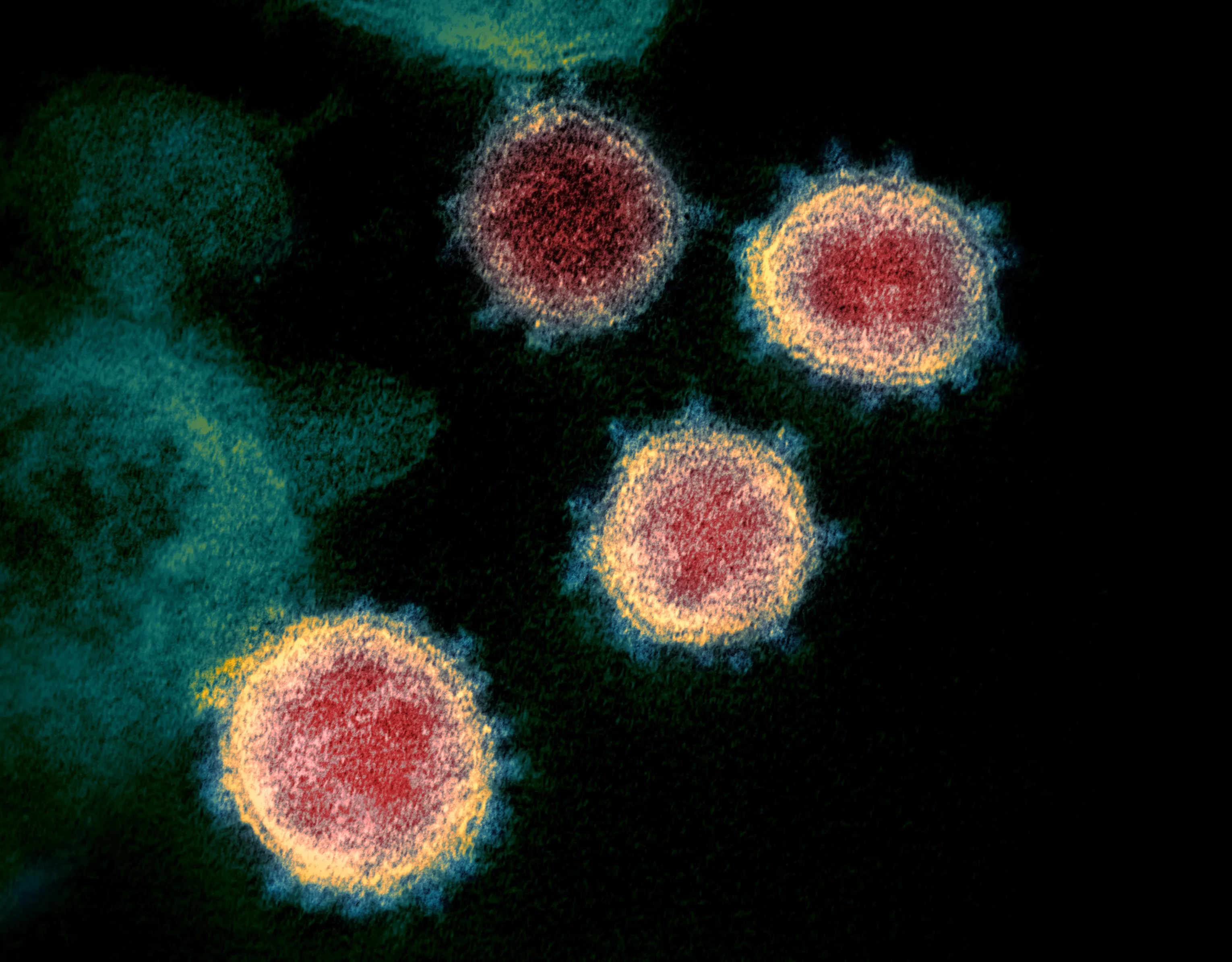

Read international coverage of the coronavirus pandemic and related global events.
Explore News
Visit the statistics section for data related to the coronavirus pandemic.
View Stats

Stay oriented with the site’s described live update format.
Read updates
A report from Human Rights Watch was featured among the site’s world news headlines.
Read More
The site featured this headline in its world news coverage.
Read More
The article covered the beginning of arguments by phone during the pandemic.
Read More
The site reported on the WHO chief’s self-quarantine after contact with a person who tested positive.
Read More
The site published an article discussing possible smartphone data sharing.
Read More
The site published an article on the initiative described in the headline.
Read More
The site discussed the subject of hoax martial law emails in a coronavirus article.
Read MoreThe US CDC has downgraded the assessed risk of COVID-19 for fully vaccinated individuals in some settings, signalling a shift away from treating vaccination status as a one-size-fits-all indicator. The revision follows years of evidence that jabs, as many Australians call COVID-19 doses, reduce the chance of serious illness while leaving room for breakthrough infection in high-exposure environments.
The distinction is between three questions: how likely someone is to encounter the virus, how likely they are to become infected, and how likely an infection is to become severe. The CDC’s revised framing does not collapse those questions into one. It weighs factors such as crowding, ventilation, duration of contact, recent disease activity and underlying health alongside vaccination history.
For Australian readers, the US advice is influential but not controlling. The Australian Centre for Disease Control, state and territory authorities, and other national bodies determine local vaccine and public-health policy. The useful question is what the risk language means for layered protection, and how it applies to Medicare-funded care, pharmacies, workplaces, schools and crowded events without overlooking vulnerable people.
| Group or circumstance | Infection risk | Severe illness risk | Meaning of the CDC change |
|---|---|---|---|
| Fully vaccinated person with lower exposure | Generally lower than for an unvaccinated person | Substantially reduced | May qualify for a lower-risk assessment in some settings |
| Fully vaccinated person in prolonged, crowded exposure | Risk can rise; breakthrough infection remains possible | Protection against severe disease remains | Added precautions may still be appropriate |
| Unvaccinated or incompletely vaccinated person | Generally higher | Generally higher | Does not receive the lower-risk designation |
| Older or immunocompromised person | Vaccination does not prevent every infection | Remains elevated despite vaccination | Needs additional protection and early clinical advice |
The CDC change is best understood as a refinement of its risk assessment rather than a repeal of public-health advice. Fully vaccinated people remain less likely than unvaccinated peers to be admitted to hospital or intensive care. What changes in some settings is the assessed likelihood of infection or transmission, allowing vaccination history to be considered alongside current exposure conditions rather than in isolation.
The phrase “some settings” covers situations in which exposure can differ sharply. A short outdoor gathering does not carry the same conditions as a packed indoor shift, a long-haul flight or close household contact. The CDC can therefore recognise lower risk in controlled environments while retaining stronger precautions where ventilation is poor, crowds persist or a highly transmissible variant is spreading widely.
CDC guidance increasingly uses the term “up to date with recommended vaccination”, while news coverage often retains the phrase “fully vaccinated”. The distinction matters because vaccination schedules and product recommendations can change. A lower-risk assessment also means lower risk, not no risk, and it does not make respiratory symptoms safe to disregard.
Vaccination’s strongest continuing benefit is protection against severe disease. Hospitalisation, intensive-care admission and death are less common among vaccinated people than among comparable unvaccinated people, although individual risk still varies with age, immune status and the timing of the last dose.
Breakthrough infections can occur, particularly following prolonged exposure to an infected person. A vaccinated person who becomes infected may also transmit the virus, which explains why vaccination cannot be treated as complete protection for everyone nearby. The lower-risk designation works alongside ventilation, testing, staying home when unwell and other measures rather than replacing them.
Protection can weaken over time, and new variants may alter how effectively existing immunity prevents infection. Updated vaccination remains important for reducing severe outcomes, especially for older Australians and people with conditions that suppress immune responses. Risk assessment based on an old vaccination record can therefore offer less reassurance than one based on current recommendations.
Lower-risk settings are generally those in which exposure is limited, brief or easier to control. Some offices, outdoor events and low-occupancy workplaces may fit that description during periods of limited transmission. The same label is less convincing in a crowded stadium, a poorly ventilated classroom or a household caring for someone who is clinically vulnerable.
Health-care and aged-care environments may justify stricter precautions because residents can be older or immunocompromised and staff may move between vulnerable people. A lower-risk designation for some general settings should not be applied automatically to every clinical environment. Australian hospitals and aged-care providers use their own infection-control guidance, outbreak assessments and occupational health rules.
Precise wording also matters when institutions communicate risk. Calling a setting low risk may wrongly reassure visitors if it implies no infection is present. Calling it moderate may make residents feel unnecessarily unsafe if it does not explain the factors behind the rating. Risk categories are most useful when paired with clear information about vaccination, ventilation, current activity and the availability of timely treatment.
There is no direct Australian equivalent to the US CDC. Australia’s Centre for Disease Control coordinates national surveillance, while state and territory health units, local councils and public-health services manage many responses. The Therapeutic Goods Administration assesses vaccines, and the Australian Technical Advisory Group on Immunisation updates the Australian Immunisation Handbook. International evidence can inform those decisions, but local policy follows Australian conditions.
Australia’s health system is a mixed market. Medicare supports most general-practitioner encounters, private insurance and out-of-pocket prescriptions cover other care, and state governments fund many public-health responses. Community pharmacies have become important vaccination access points, while laboratories and pathology networks determine how many infections are confirmed. This structure can produce different access patterns from the United States.
Population density is also uneven. Sydney and Melbourne commuter trains, pubs and large cultural events create different exposure patterns from regional Tasmania. Across northern Australia, including remote communities in the Northern Territory and Western Australia, distance from a hospital or pathology service can make testing and transport harder. Australian speech adds another layer: a dose is often called a jab, while “fair dinkum” can mark a blunt assessment of seriousness. CDC categories need translating into that local context.
Confirmed case counts can understate the extent of an outbreak because many Australians use rapid antigen tests at home and do not report every positive result. Notifications also arrive with delays. Hospital and emergency-department activity, respiratory illness presentations, wastewater surveillance where available and reports from general practices can provide a broader picture of what is happening.
Researchers can also examine ambulance dispatch codes, which can act as an early proxy for respiratory distress before laboratory confirmation. In Australia, emergency call-taking through Triple Zero and ambulance dispatch data may complement testing and hospital surveillance, especially when rising emergency demand becomes visible before national case totals settle.
These signals require careful interpretation. Bushfire smoke over Sydney or Melbourne can increase cough, wheeze and emergency presentations without causing a new infectious outbreak. Changes in testing behaviour can also move case numbers independently of transmission. Data are most informative when several indicators move together rather than when one weekly count is treated as a definitive verdict.
Household planning is easier when risk is divided into manageable layers: improving airflow, reducing prolonged close contact with symptomatic people, using a well-fitted mask in shared indoor areas and testing when compatible symptoms appear. People at greater risk should seek early clinical advice because assessment and treatment are most effective soon after symptoms begin. Australian general practitioners can discuss antiviral options, including PBS-listed medicines when eligibility criteria are met.
Workplaces can manage risk through ventilation, flexible sick-leave policies and appropriate mask use during outbreaks. Australia has no universal entitlement to paid sick leave, so small businesses can face sharper trade-offs than large organisations with established workforce policies. The Fair Work Ombudsman and relevant employment agreements can clarify obligations, while health and safety duties apply regardless of workplace size.
Separate reporting on lung-function trial findings adds a longer-term perspective that case numbers cannot provide. Persistent respiratory symptoms or reduced lung function can affect work, exercise and future planning long after an acute wave. Changes in immediate risk classifications do not remove the consequences of infection among those who experience them.
Several measures reveal whether a lower-risk assessment remains reasonable: vaccination uptake, the prevalence of respiratory illness, emergency visits, hospital and intensive-care occupancy, wastewater signals and the emergence of variants that alter existing immunity. Sudden improvement in reported cases may reflect reduced testing or the end of a reporting period, so changes need confirmation across more than one measure.
Risk language can also move through financial markets. Because cryptocurrency trades around the clock, Australian investors can react to US health announcements before local exchanges open. Prices are often quoted in Australian dollars on global platforms, while the Australian Taxation Office and Australian Securities and Investments Commission oversee different parts of the market. The site’s Buy Crypto section covers access to an always-on market where algorithmic trading can amplify a policy headline.
The CDC revision is best treated as evidence that risk should be judged by layers rather than a single status label. Australian decisions still need to account for population ageing, booster uptake, timely treatment, hospital capacity, seasonal influenza and smoke exposure. Vulnerability has fallen for many fully vaccinated people, yet the severity of infection and pressure on the health system still depend on the wider situation.