
Venezuela using coronavirus as cover to crack down on dissent, report claims
A report from Human Rights Watch was featured among the site’s world news headlines.
Read MoreLive world news related to the coronavirus (COVID-19) pandemic, updated by the minute. Follow global developments, statistics, and selected cryptocurrency news.
Read international coverage of the coronavirus pandemic and related global events.
Explore News
Visit the statistics section for data related to the coronavirus pandemic.
View Stats
Stay oriented with the site’s described live update format.
Read updates
A report from Human Rights Watch was featured among the site’s world news headlines.
Read More
The site featured this headline in its world news coverage.
Read More
The article covered the beginning of arguments by phone during the pandemic.
Read More
The site reported on the WHO chief’s self-quarantine after contact with a person who tested positive.
Read More
The site published an article discussing possible smartphone data sharing.
Read More
The site published an article on the initiative described in the headline.
Read More
The site discussed the subject of hoax martial law emails in a coronavirus article.
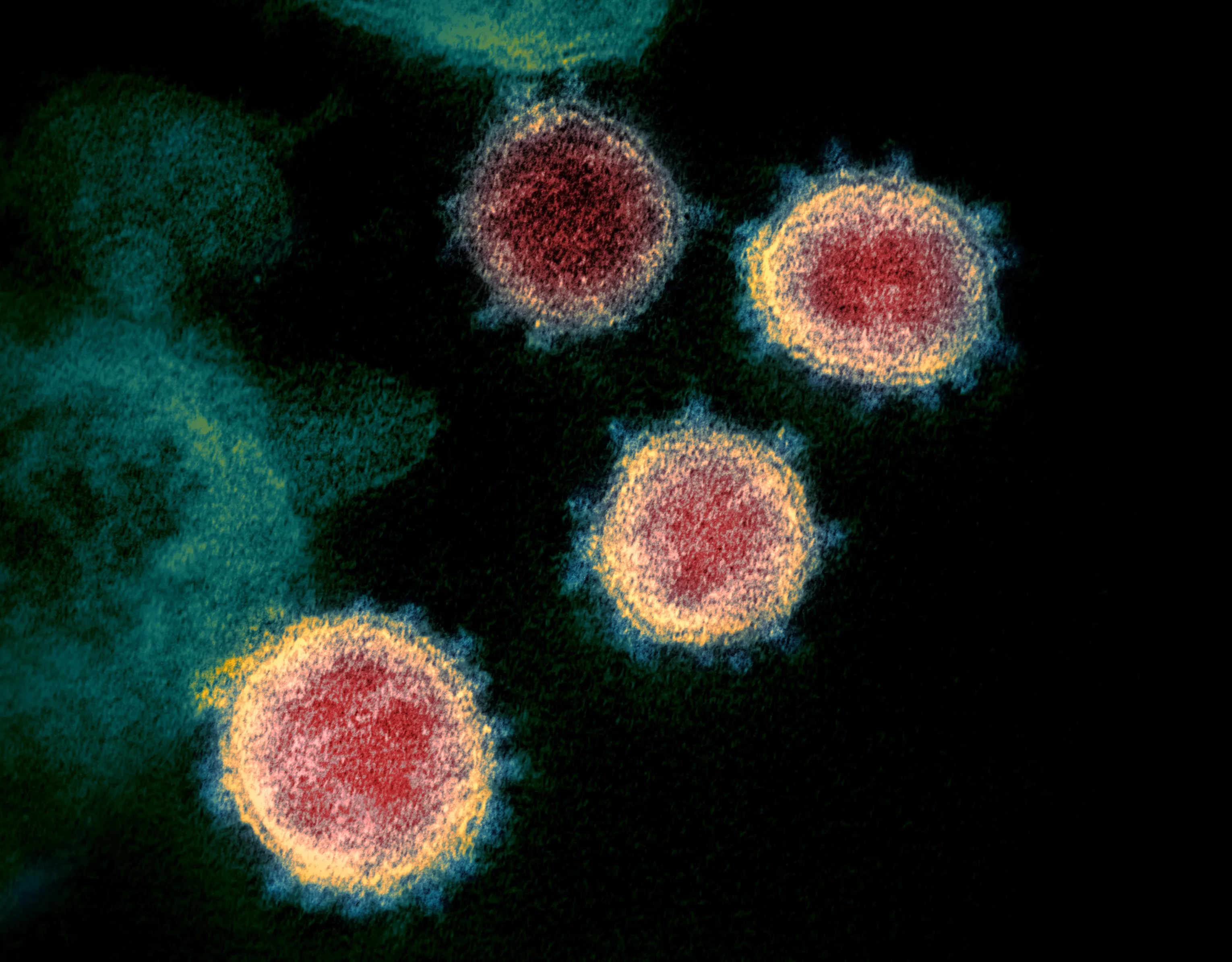
Read MoreA new study suggests COVID-19 can be transmitted through airborne particles for hours, raising fresh questions about how long infectious virus may linger after an infected person leaves a room. The research reviewed evidence that SARS-CoV-2 can remain viable in fine respiratory particles under controlled conditions. It does not mean every infected person leaves a trail of infection or that an hour indoors guarantees illness.
The distinction matters because airborne spread depends on more than the presence of virus. Risk rises with particle concentration, exposure time, poor ventilation and lack of protective measures, and falls when air is exchanged or a meeting moves outdoors. Detection of viral genetic material also does not by itself prove that particles remain infectious.
For Australians, the findings are most relevant in crowded indoor settings: a packed train in Sydney, a tram in Melbourne, a shared apartment kitchen, a noisy pub or an aged-care lounge. These are ordinary places where people may remove masks to talk, eat or sing, allowing respiratory particles to accumulate faster than a cough alone would.
Public guidance should therefore be practical rather than alarming. Staying home when unwell, improving indoor airflow, using a well-fitting mask and arranging vaccination remain sensible layers of protection. The study adds detail to the established idea that COVID-19 is primarily an indoor respiratory risk while leaving questions about duration and real-world transmission for researchers to refine.
The paper brings together laboratory observations and evidence from outbreaks to argue that fine particles carrying SARS-CoV-2 may stay suspended indoors beyond the moment of emission. The findings are discussed in an Apollo Medical Journal analysis, which notes that some controlled experiments have detected viable virus after several hours. Such results explain why ventilation and elapsed time influence risk.
“Several hours” is the key qualification. Experimental conditions often use small chambers, artificial aerosolisation or carefully prepared viral samples. These methods help researchers test survival, but they do not perfectly reproduce a busy restaurant, classroom or bus. In real settings, airflow patterns, humidity, movement, particle size and cleaning all alter what happens after a person coughs, talks or breathes.
The report also separates two questions that are often blurred together: how long a particle remains airborne, and how long the virus inside it can remain viable. A suspended particle may carry detectable material without posing the same infectious risk as one containing viable virus. Epidemiological data support substantial indoor transmission, yet investigators usually cannot identify the precise minute or shared object responsible for a case.
Respiratory particles range from larger droplets that settle relatively quickly to fine aerosols that can linger and be inhaled. Speaking and singing can generate more aerosol than quiet breathing, while close contact increases the dose reaching another person. An enclosed room lets those particles build up, particularly when several people remain in place for a long period.
Apartment living in Melbourne and Sydney makes ventilation a household issue as well as a building issue. Open windows, exhaust fans in kitchens and bathrooms, and portable HEPA cleaners can reduce particle levels, but many high-rise residents have limited control over communal lifts and corridors. Sydney commuters face different exposure patterns, including enclosed platforms and buses where windows may remain closed during hot or wet weather.
Melbourne’s winter indoor heating and Sydney’s humid summers can also shape air conditions, although neither climate makes transmission inevitable. The safer comparison is between poorly ventilated, crowded rooms and spaces with fresh air, shorter visits and filtration. Moving an event outdoors or opening a verandah door can interrupt the chain of exposure without requiring anyone to abandon ordinary social activity.
Australian routines already offer several low-cost ways to lower risk. People can wear a well-fitting P2 or N95 respirator on crowded public transport, choose outdoor seating where possible, and keep meetings brief in enclosed spaces. Cloth or loose-fitting masks provide less reliable filtration. Any mask works better when it seals closely around the nose and mouth and is worn consistently.
Rapid antigen tests remain useful before visiting older relatives, entering aged care or attending a large indoor event, although a negative result does not rule out infection. Testing is most reliable when repeated according to current Australian health guidance and when symptoms are considered. People who feel unwell should avoid work, school and travel until they can assess whether they are infectious.
Ventilation can become habitual rather than technical: run the extractor while cooking, open opposite windows to create cross-flow, move meetings away from the smallest room and avoid unnecessary time in a car with several people. Air-quality alerts for smoke or bushfires show how quickly Australians use local guidance; COVID-19 precautions can similarly follow building, workplace and public-transport conditions.
Vaccination remains one of the strongest protections against severe illness, hospitalisation and death, particularly for older people and those with chronic conditions. It reduces the chance of serious outcomes but does not completely prevent infection, so it complements ventilation, masks and testing rather than replacing them. Australians can check current eligibility and arrange vaccination through a GP, pharmacy or authorised health service.
Some United States jurisdictions have used prize campaigns to increase uptake, a tactic covered in an American vaccine lottery report. Incentives may prompt a first dose, but they cannot fix poor access, misinformation or distrust. Australian programmes rely more heavily on national advice, local health services and clear communication, and any campaign still needs to reach priority groups.
Legal duties also sit alongside personal precautions. Victoria’s Public Health and Wellbeing Act 2020 and NSW’s Public Health Act 2010 have provided frameworks for public-health orders during declared emergencies, although routine pandemic restrictions have largely been wound down. Organisations should follow current state and territory directions, while workplaces can use their existing duties of care to improve ventilation and keep symptomatic staff away from others.
The Australian market has seen lasting demand for masks, rapid tests and portable air cleaners, with pharmacies and hardware stores serving households that once paid little attention to indoor airflow. For small businesses in Melbourne and Sydney, ventilation has become part of event planning, hospitality design and office policy. The result is a practical response that also supports local suppliers, installers and health services.
Some households have also explored volatile digital assets while looking for ways to manage savings and remote-work income. For readers following that side of the news, a cryptocurrency buying guide sets out how to assess platforms and risks. Digital assets carry substantial loss risk and cannot prevent infection; they should never be presented as a substitute for mainstream financial products or medical precautions.
No single measure removes every risk, so the most useful approach compares protection, practicality and limitations:
| Measure | How it lowers risk | Best suited to | Important limitation |
|---|---|---|---|
| Fresh air and cross-ventilation | Dilutes suspended particles and lowers their concentration | Shared rooms, classrooms and meeting spaces | Weather, noise and building design may limit airflow |
| HEPA filtration | Captures fine particles directly from room air | Apartments, offices and small hospitality venues | Requires safe sizing, maintenance and replacement filters |
| Well-fitting P2 or N95 respirator | Reduces inhalation and emission of respiratory particles | Public transport, clinics and crowded indoor events | Fit, comfort and consistent use determine protection |
| Rapid antigen testing | Helps identify infectious people before close contact | Gatherings, aged-care visits and workplace entry | False negatives are possible, especially early in infection |
| Vaccination | Lowers the likelihood of severe disease and complications | Priority groups and anyone eligible under current guidance | Protection against infection is incomplete and may wane |
| Staying home when unwell | Removes a potential source of emissions | Anyone with symptoms or a recent positive test | May disrupt work and requires timely access to leave |
The strongest response is layered rather than alarmist. Australians can watch ventilation and exposure time, use a good mask in busy enclosed settings, test before high-risk visits, stay home when ill and keep vaccination current. For anyone with symptoms who is worried or at higher risk, Healthdirect or a state health service can provide advice on testing and care.