
Venezuela using coronavirus as cover to crack down on dissent, report claims
A report from Human Rights Watch was featured among the site’s world news headlines.
Read MoreLive world news related to the coronavirus (COVID-19) pandemic, updated by the minute. Follow global developments, statistics, and selected cryptocurrency news.
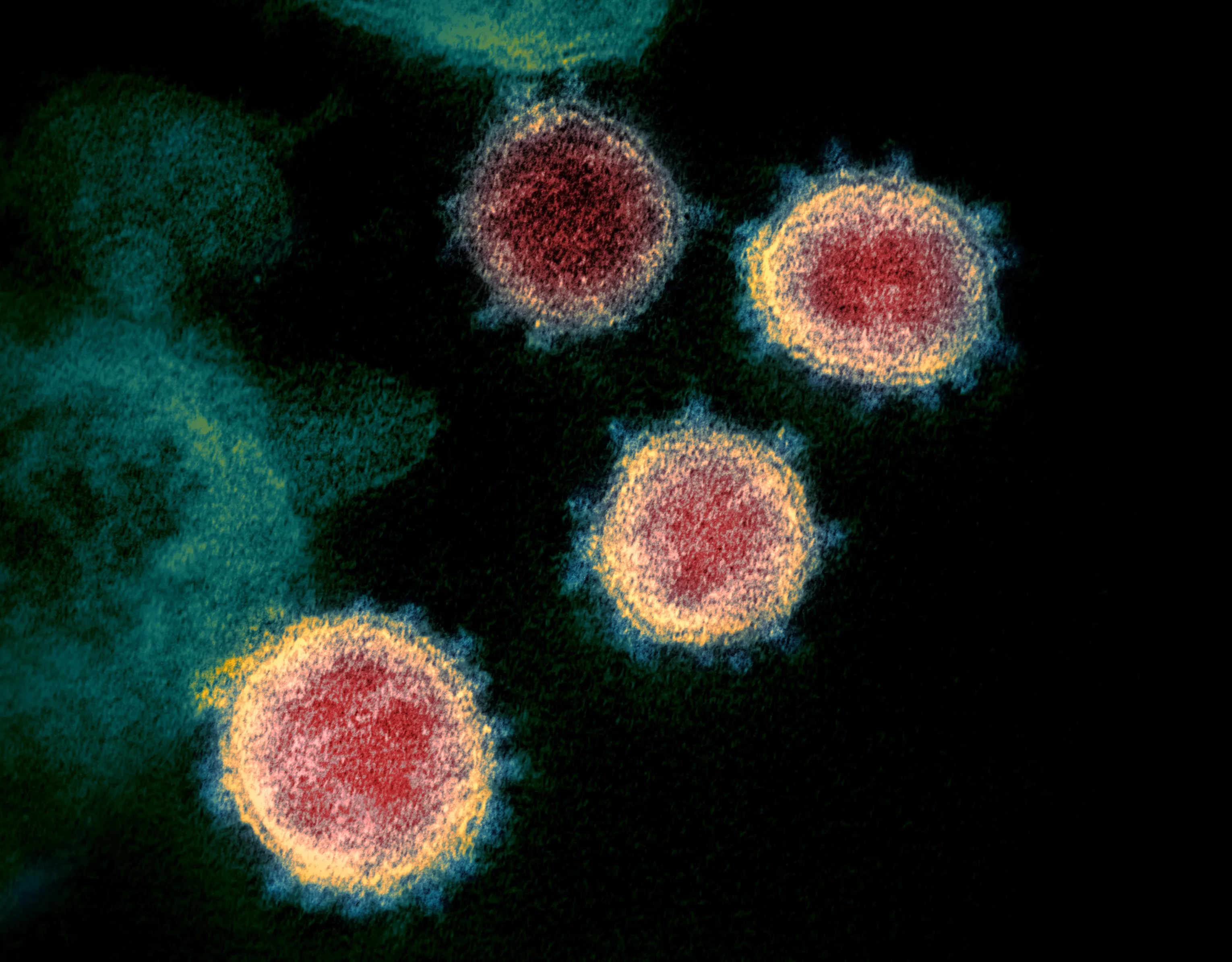

Read international coverage of the coronavirus pandemic and related global events.
Explore News
Visit the statistics section for data related to the coronavirus pandemic.
View Stats

Stay oriented with the site’s described live update format.
Read updates
A report from Human Rights Watch was featured among the site’s world news headlines.
Read More
The site featured this headline in its world news coverage.
Read More
The article covered the beginning of arguments by phone during the pandemic.
Read More
The site reported on the WHO chief’s self-quarantine after contact with a person who tested positive.
Read More
The site published an article discussing possible smartphone data sharing.
Read More
The site published an article on the initiative described in the headline.
Read More
The site discussed the subject of hoax martial law emails in a coronavirus article.
Read MoreA renewed increase in COVID-19 infections across parts of the US Midwest has prompted the Centers for Disease Control and Prevention to warn that a fourth wave could be developing. The signal comes as health authorities monitor rising case reports, wastewater readings and hospital admissions rather than relying on a single measure of transmission.
The warning does not mean every American state is entering a large national surge at the same speed. COVID-19 activity remains uneven, with local conditions shaped by vaccination coverage, previous infections, indoor crowding, age profiles and the circulation of new subvariants. Still, the Midwest has often provided an early indication of wider changes in the US pandemic pattern.
For Australians, developments in the United States remain relevant because international travel, workplace practices and public health guidance can change quickly when hospital pressure increases. Sydney, Melbourne, Brisbane and Perth have different population movements and health-system demands, yet all are connected to global respiratory-virus trends through airports, schools and workplaces.
A “wave” is a period in which infections rise across a broad population and begin to place additional pressure on hospitals and other health services. The CDC’s concern is based on several indicators moving in the same direction, including increased positive tests, emergency presentations, hospitalisations and wastewater concentrations. Each measure has limitations, but their combined movement can reveal a meaningful shift.
Wastewater surveillance has become especially valuable because it can detect viral material from people who do not test or develop obvious symptoms. It may also provide an earlier warning than hospital data. Hospitalisation figures, by contrast, are slower to change but give a clearer picture of the severity of illness and the burden on doctors, nurses and intensive-care units.
The Midwest includes densely populated metropolitan areas, smaller regional communities and states with differing public health policies. A rise in one city may reflect a local outbreak, while increases across several states suggest broader community transmission. Health officials therefore examine geographic spread, age groups affected and whether admissions are rising among older people or those with chronic conditions.
The present warning should be read as an alert for preparation rather than a prediction that every community will experience the same level of disruption. People seeking general health information can consult reliable health resources while also checking advice from their local health department and medical provider.
Respiratory viruses spread more efficiently when people spend longer periods indoors, especially in poorly ventilated rooms. Seasonal changes, colder weather and the return of students to classrooms can create conditions for faster transmission. In the US Midwest, these factors may overlap with large indoor events, university populations and commuting between neighbouring states.
Population immunity is also uneven. Protection from vaccination or earlier infection can decline with time, and immune escape by a newer variant may allow infections among people who were previously protected. An infection does not automatically lead to severe disease, yet a large number of mild or moderate cases can still produce more hospital admissions when vulnerable people are exposed.
Testing behaviour affects the apparent size of a wave. Many people now use rapid antigen tests at home, do not test at all, or seek clinical care only when symptoms become serious. Official case counts can therefore understate transmission. Public health agencies give greater weight to a collection of indicators rather than treating reported cases as a complete record.
The economic effects can appear before hospitals reach crisis levels. Staff absences can disrupt schools, transport, hospitality and aged care. In Australia, a cluster in Melbourne can quickly affect office attendance and public transport use, while a rise in Sydney can influence domestic travel, major events and retail activity. Businesses that depend on reliable staffing remain sensitive to even moderate infection waves.
Australia has its own surveillance system and does not automatically follow the US trajectory. The Australian Government and state health departments use hospital data, laboratory reporting and wastewater monitoring to track COVID-19 and other respiratory illnesses. National patterns can conceal sharp differences between New South Wales, Victoria, Queensland, Western Australia and smaller jurisdictions.
Everyday behaviour remains important. Australians often spend time in cafés, shopping centres, sporting grounds and public transport hubs, where ventilation and crowding vary considerably. In Sydney and Melbourne, long train and tram journeys can increase close contact during peak periods. In Brisbane, Perth and Adelaide, major festivals, school calendars and local travel patterns can produce different timing for respiratory-virus activity.
The local market has also changed since the early pandemic. Pharmacies stock rapid antigen tests, masks and cold-and-flu products, while supermarkets and online retailers sell home testing kits alongside ordinary household goods. Supply can fluctuate when demand rises suddenly, and the price of tests may matter for families, casual workers and people managing several chronic illnesses.
Australian legislation and public rules are less uniform than the emergency measures used in 2020 and 2021. State and territory governments can issue health directions, while federal agencies guide vaccination, border and aged-care policy. Most broad isolation requirements have ended, but hospitals, residential aged-care facilities and employers may still apply infection-control rules for staff and visitors.
The legal response to COVID-19 has also evolved in the US. Courts, governments and businesses have repeatedly debated the limits of emergency powers, workplace requirements and public health orders. Earlier pandemic reporting, including coverage of phone-based arguments before the US Supreme Court, illustrates how quickly ordinary legal procedures were adapted during periods of severe disruption.
Vaccination remains a key defence against severe disease, particularly for older adults, people with weakened immune systems and those with medical conditions such as heart or lung disease. The strongest protection comes from following the current schedule recommended by health authorities and discussing individual risks with a doctor or pharmacist.
Australians who develop symptoms can reduce exposure to others by staying home when unwell, improving indoor airflow and wearing a well-fitting mask in crowded settings. These measures also help limit influenza and respiratory syncytial virus, which can circulate at the same time and make diagnosis more difficult.
A rapid antigen test may help identify an infection, although a negative result early in an illness does not always rule COVID-19 out. People with symptoms or a known exposure may need to repeat testing according to current medical advice. Those at higher risk should seek help promptly because antiviral treatment is most effective when started early.
Treatment access can vary according to eligibility, location and whether a patient has an established relationship with a GP. Rural and remote communities may face longer travel times, fewer appointments and different pharmacy availability. Telehealth has improved access for some Australians, although it cannot replace an in-person assessment when breathing problems, dehydration or serious symptoms develop.
Hospitals and aged-care facilities are especially important indicators of the impact of a new wave. A rise in admissions among frail residents can place pressure on families, nurses and support workers even when the general population experiences mostly mild illness. Clear communication about visiting rules, masks and outbreak management helps facilities protect residents without creating unnecessary confusion.
The CDC warning is most useful when interpreted alongside the speed of increase, the severity of illness and the capacity of health services. A high number of infections with stable admissions may indicate stronger population protection, broader testing or a variant that causes less severe disease. A smaller increase accompanied by rising intensive-care use would present a more serious concern.
Australia can draw practical lessons from the US without copying every policy. Federal and state authorities need timely data, consistent public messages and targeted support for groups most likely to become seriously ill. Residents also need information that distinguishes confirmed trends from early signals, particularly when social media posts turn isolated outbreaks into claims of a nationwide emergency.
| Indicator | What it can show | Limits to interpretation | Relevance in Australia |
|---|---|---|---|
| Reported cases | The number of infections detected through testing | Misses people who do not test or report results | Useful for identifying local clusters |
| Wastewater levels | Community viral activity, including undiagnosed infections | Cannot reliably identify exact case numbers or severity | Helps compare cities and regional catchments |
| Hospital admissions | The effect of COVID-19 on health services | Changes later than transmission and can vary by reporting practice | Important for planning beds, staff and treatments |
| Emergency presentations | Demand for urgent medical care | Includes people with symptoms caused by other illnesses | Highlights pressure in major hospitals |
| Deaths | The most severe outcome of infection | Lags behind cases and is influenced by age and comorbidities | Helps assess the real burden of a prolonged wave |
| Vaccination uptake | The level of recent protection in the population | Does not measure immunity from earlier infection or individual risk | Guides outreach to older and vulnerable groups |
The US Midwest’s experience may therefore serve as an early international signal, while Australian decisions will depend on local evidence. A rise in cases deserves attention, but the broader picture includes hospital capacity, vaccination recency, treatment access, workplace absences and the protection available to people in aged care.
Monitoring these factors can prevent two common errors: dismissing a genuine increase because daily life appears normal, or treating an early warning as proof of an unavoidable national shutdown. The fourth-wave concern is a reminder that COVID-19 remains capable of changing direction, even as communities continue adapting to life with the virus.